




The Team
Head of Graduate School
Dr. Hanna Singer
Administrative Assistant
Annette Schledz, Dipl. Biol.
Phone: +49 30 9406 1508
aschledz@mdc-berlin.de

The MDC Graduate School provides a tailored comprehensive training program for doctoral researchers within the MDC Research Program “Systems Medicine and Cardiovascular Diseases”.

Doctoral researchers at the MDC conduct their research in the areas of Cancer Research, Cardiovascular and Metabolic Diseases, Disorders of the Nervous System, Medical Systems Biology, Clinical Research, Immunology & Inflammation, Single Cell approaches, Translational Vascular Biomedicine and Data Science & Artificial Intelligence.
The Graduate School currently hosts more than 380 PhD researchers with the share of doctoral researchers coming from abroad reaching 65%.

https://www.mdc-berlin.de/special— research— schools
MDC doctoral researchers enroll at a university to obtain their doctoral degree. The MDC Graduate School has established partnerships with several Berlin universities, enabling researchers to earn degrees from Humboldt-Universität zu Berlin, Freie Universität Berlin, or Charité-Universitätsmedizin Berlin.
While most doctoral researchers choose one of these universities, it is also possible to obtain a degree from another institution, provided joint supervision with the MDC is accepted. The MDC Graduate School offers assistance with the university procedures of its Berlin partner universities.
At Berlin partner universities, semester fees of 300 — 320 EUR are paid twice a year, and include a student ticket to Berlin’s public transport.
Close day-to-day supervision of doctoral researchers by the group leader is complemented with a Thesis Advisory Committee (TAC). Annual TAC meetings provide advice and formalized guidance of the doctoral project progress, from the research project outline to the preparation of the dissertation.
Training at the MDC Graduate School includes:
The MDC is organizing numerous scientific events, conferences, and symposia throughout the year, including the annual PhD Retreat, Graduation Ceremony, annual PostDoc Day, Career Day, the IPSCC — International PhD Student Cancer Conference, and a variety of topic-specific events within the special research programs.
Many of those events are organized with the support of doctoral researchers who are interested in event planning.
The MDC Graduate School curriculum is designed to equip each doctoral researcher with the knowledge and skills needed to successfully complete their dissertation and seamlessly transition to the next stage of their career, whether within or beyond academic research.
Whether you plan to continue in academia or explore opportunities in industry, management, or alternative fields, the activities offered throughout your doctoral studies at the MDC are crafted to inspire and prepare you for your next career step. The MDC Career Center offers consultations and advice about current and future career steps.
MDC doctoral researchers receive full funding through an initial 3‑year employment contract with the MDC. Salaries are competitive with national standards, based on 65% of TVöD 13 (with a monthly net payment of approximately 1,800 EUR). The contract includes health and social insurance, as well as a pension plan.
In many cases, contracts are extended for an additional year. All doctoral researchers are expected to complete their doctoral research and thesis within 4 years
Read more about the people who make the core of the Graduate School here.

https://www.mdc-berlin.de/system/files/document/PhD%20report%202024.pdf
The MDC international PhD Program offers the opportunity for PhD students to attend excellent talks, given by outstanding researchers across diverse research fields, as well as to discuss and network with the invited speakers.
The MDC Graduate School curriculum consists of different modules, encompassing individual supervision, scientific and key competences training, presentation and outreach activities, and more.
Whether you are planning to continue your path within academic research or explore industry, management, or alternative directions, activities throughout your doctoral time at the MDC are designed to inspire and prepare you for your next career step.

The MDC Graduate School regularly organizes Orientation Weeks for new doctoral researchers, covering university regulations, MDC training activities, the Graduate School structure, curriculum and credit system, as well as essential topics such as good scientific practice, collaboration, and open science.
In 2024, a scientific Core Course for new PhDs was introduced, led by MDC faculty. It is designed to offer an overview of research spanning all MDC topics and focus areas, fostering a foundational understanding of the institute’s diverse scientific landscape.
Orientation session: Communication workshop
The MDC offers a variety of lectures, seminars, and courses essential for the development of early-career researchers.
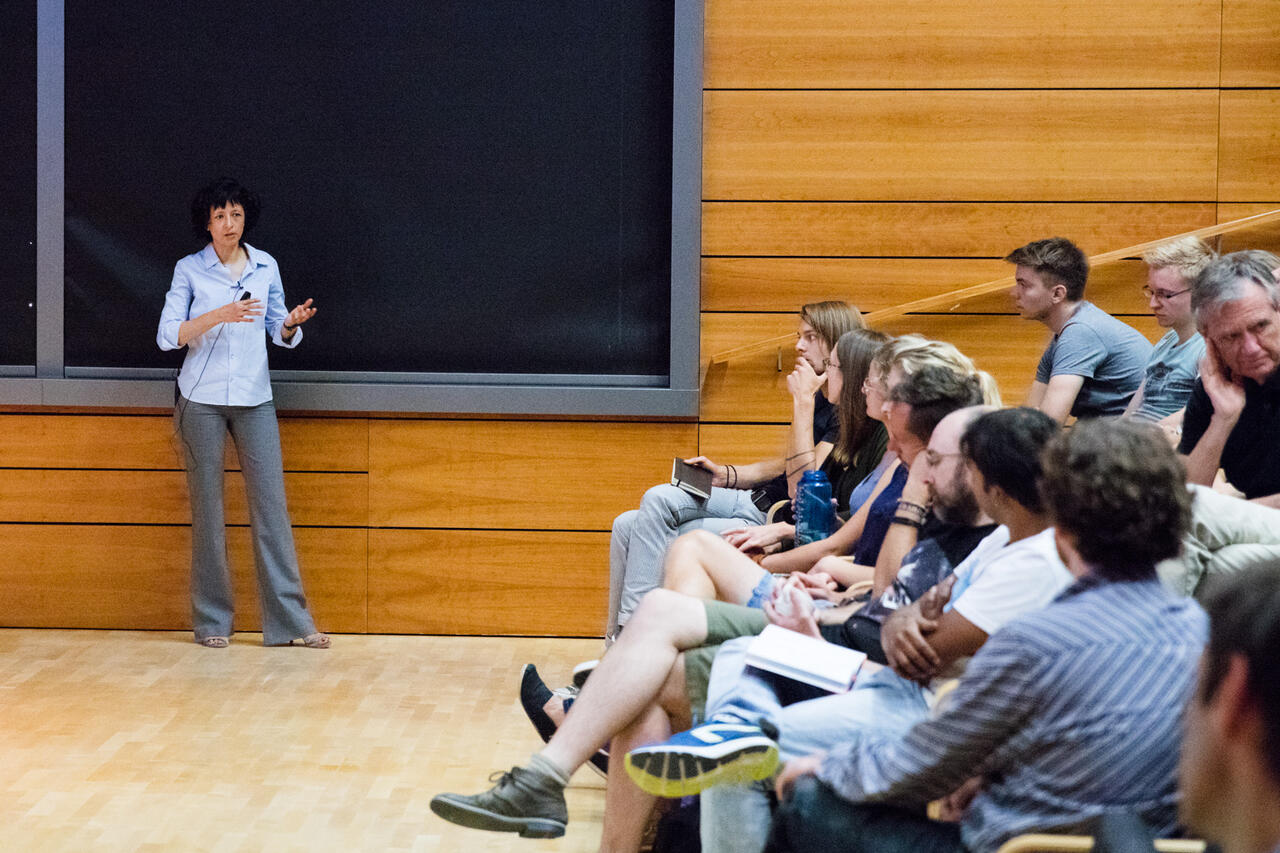
Nobel laureate Thomas Südhof speaking to a packed lecture hall at the MDC
Available courses include computational training, experimental science and methods, analytical tools, and more:
Training in Good Scientific Practice is mandatory for all doctoral researchers.
The Graduate School offers training and travel grants to support participation in international scientific courses and workshops, as well as for extended visits to partner laboratories abroad.

The MDC offers a range of key competency courses on campus tailored to the needs of early-career researchers. These include courses in scientific writing, communication and presentation, project and time management, teamwork and networking, or intercultural competence.
Diversity, Equity, and Inclusion (DEI) training is given special attention at the MDC, including workshops, interactive sessions, and seminars that promote awareness, encourage inclusive practices, and support a respectful, collaborative research environment.
Career development is supported by the MDC Career Center, which offers training and counseling on topics such as career pathways, grant and fellowship applications, or management and leadership. Additionally, English and German language courses are available.
Doctoral researchers are expected to present their work to the scientific community at various forums, including MDC student seminar presentations, PhD retreats, campus symposia, or international conferences.
The MDC Graduate School supports participation in international conferences via travel grants.
Other opportunities include:
Doctoral researchers interested in event planning can participate in organisation of various scientific events, conferences, and symposia over the year, including topic-specific events within different special research programs.
MDC doctoral researchers, in collaboration with their colleagues from the Leibniz-Institut für Molekulare Pharmakologie (FMP), organize annual PhD retreats, bringing together young scientists from all research areas of both institutes. Highlights of the scientific sessions include plenary talks by internationally recognized scientists. The scientific program is usually complemented with social activities, as well as panel discussions on various scientific topics and their relevance for society.
Every year, a Graduation ceremony, an event to celebrate and honour the last years’s graduates is held at the MDC. An MDC PhD prize, a recognition of the best student publication, sponsored by the Society of Friends of the MDC, is awarded every year. Since 2007, the Prize for Best Scientific Image has been presented during MDC Graduation ceremony, as well.
Scientific events that bring together members of the specialised research programs, as well as internationally recognized guest speakers from all over the world, are organised at the MDC and partner institutions, including winter and summer schools, symposia or joint retreats.
Since 2007, the IPSCC — International PhD Student Cancer Conference has brought together PhD students from 14 leading cancer research institutes across Europe. Organized by PhD students for PhD students, the conference provides participants with the opportunity to present their research and connect with top scientists in their field. The MDC is one of the partner institutions, co-organizing this event.
Different community events, such as Friday After Hour, Summer Fest, Christmas Party, or Glühwein stand in winter and ice-cream stand in summer, are organised to support networking of our researchers, and provide an opportunity to relax and have fun.
Annual PostDoc Day and Career Day are organised on campus to offer insights and facilitate discussions on the wide range of career possibilities, both within and beyond academia.
MDC Diversity, Equity and Inclusion Weeks strengthen our community by fostering open communication and building shared understanding.
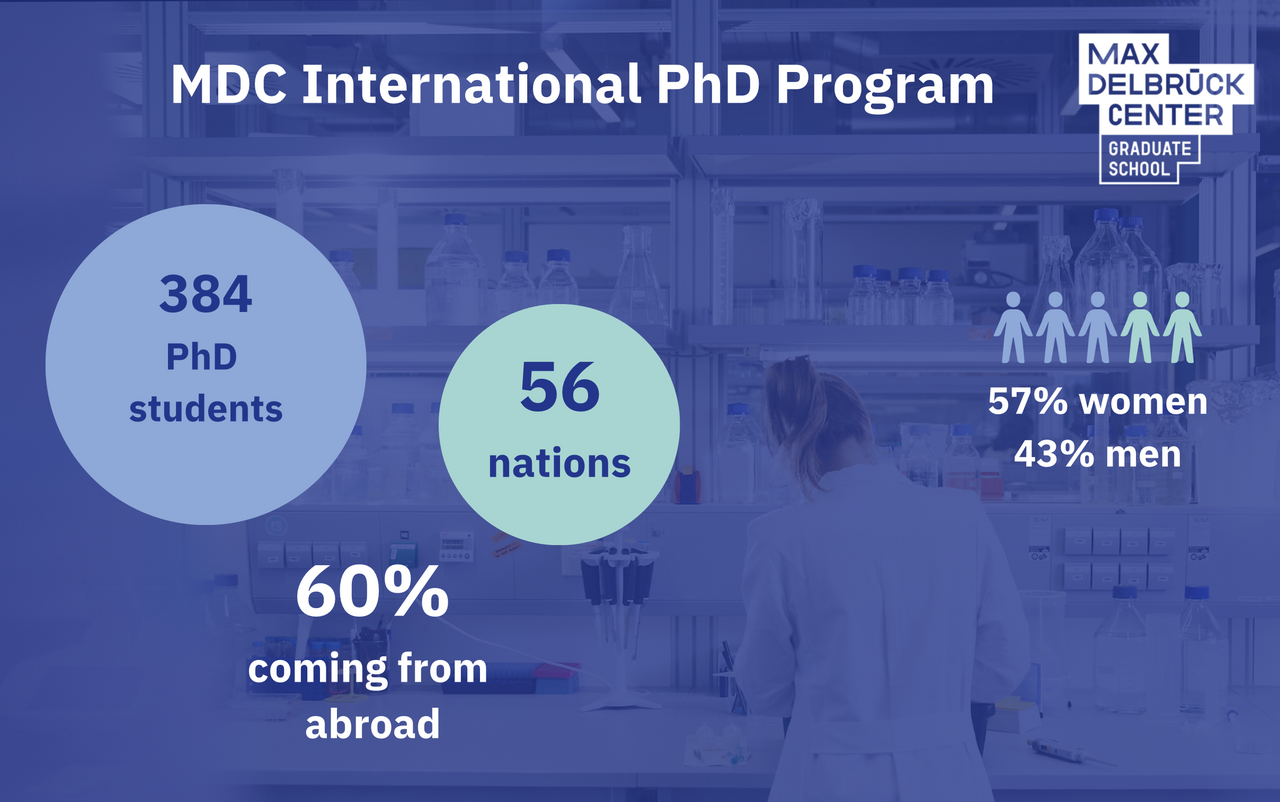


The MDC Graduate School currently supports over 380 doctoral researchers working in one of the research groups at the institute or at one of our partner institutions.
The MDC Graduate School, along with the research schools and exchange programs, is led by one or more Program Speakers and supported by Program Coordinators.

Dr. Koliane Neary Ouk
koliane.ouk@mdc-berlin.de
TBA
Dr. Hanna Singer
We aim to establish a platform for students on campus to communicate and initiate discussions on the issues that matter to you. Please feel free to share any concerns or ideas you may have. It is important that PhD researchers have a voice and a structured way to communicate their needs to other branches of the institute.

Don’t hesitate to contact us at phd_representatives@mdc-berlin.de
We also participate in Helmholtz Juniors , which consists of doctoral student representatives from all 18 Helmholtz Research Centers across Germany. This allows scientists across the Helmholtz Association to discuss issues relevant to all centers.
An ombudsperson acts as trusted intermediary and supports in case of problems related to the work at the MDC, independently and confidentially. Ombudspersons counsel, give advice or help moderate a discussion. They are a contact point for questions, help to resolve misunderstandings, and identify solutions and strategies for conflict resolution.
The PhD Ombudspersons are elected by the student body and are available to all PhD students.
The position of Research Ombudsperson is responsible for safeguarding standards of good scientific practice. In cases of scientific misconduct, the ombudsman is the first point of contact for all researchers at the MDC and can advise and assist them in conflict situations.
Frequent and radical changes through Berlin’s turbulent and noticeably present history have transformed the face of the city many times over. But despite this, the city has succeeded in becoming a thriving metropolis, with a population of 3,7 million people, extremely attractive to students.
Extraordinary wealth of cultural opportunities attracts increasing numbers of visitors, making Berlin one of the most popular destinations in Europe. It boasts a lively scene with lots of pubs, clubs, restaurants and cafés. Densely urban areas coexist with large green spaces, nature reserves, lakes and rivers, all within the city boundaries, offering a truly metropolitan lifestyle.

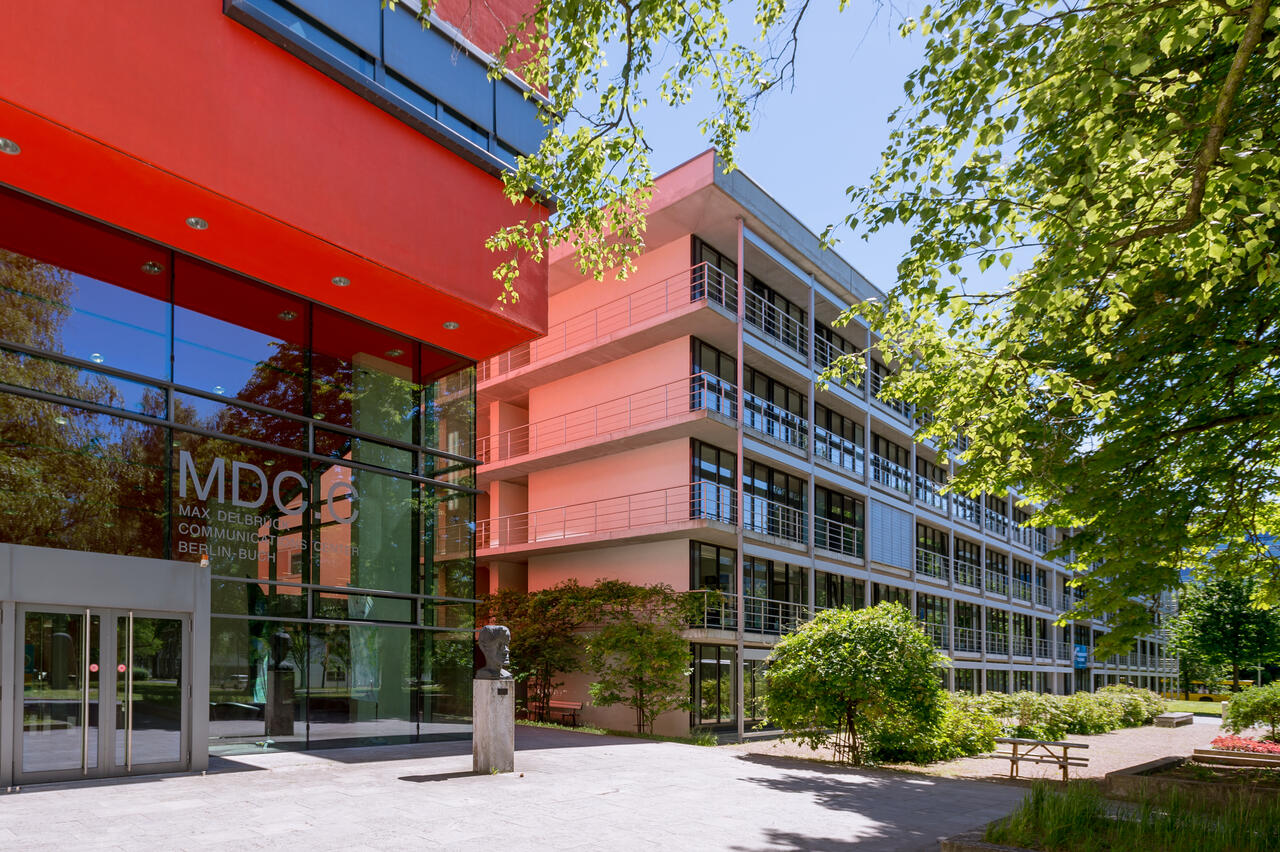
The MDC is situated at two locations in Berlin: majority of infrastructure is located on Campus Berlin-Buch, a modern science and biotechnology park with a clear focus on biomedicine.
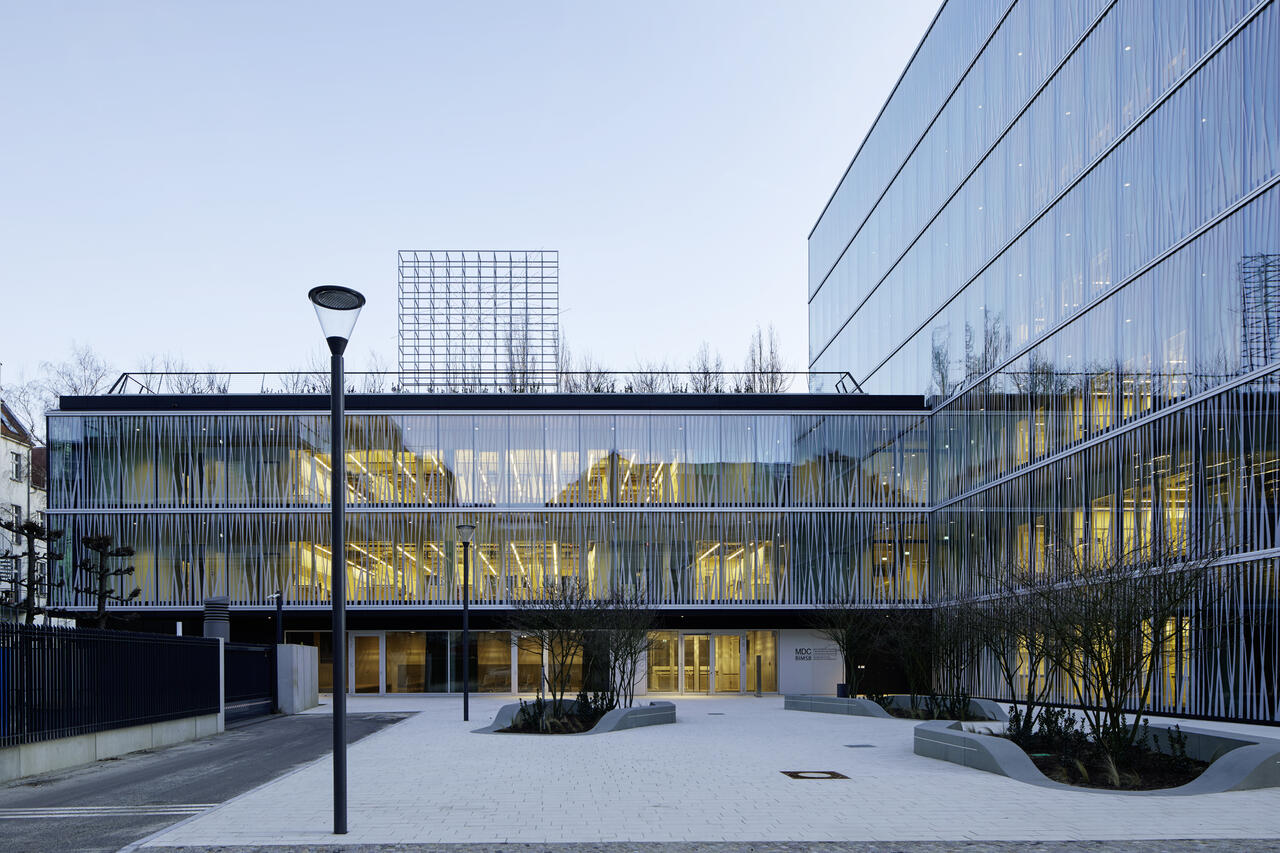
Since April 2019, the laboratories and offices of the MDC-BIMSB are located in our new building on Campus-Mitte.
BIMSB is a part of MDC and located in Berlin-Mitte.